

Introduction: The Disruptive Force of Decentralization
The emergence of Blockchain Technology and its most prominent application, Cryptocurrency, represents one of the most profound technological shifts since the advent of the internet. This innovation introduced a concept fundamental to its nature: decentralization. It promises to reshape finance, data management, and governance by enabling trustless, transparent, and immutable record-keeping without relying on a central authority, such as a bank or government. While hailed by enthusiasts as the future of money and data integrity, this disruption poses complex and unprecedented challenges for traditional legal and financial regulators worldwide. The very features that make blockchain appealing—anonymity, cross-border functionality, and lack of central control—are precisely the elements that clash directly with existing regulatory frameworks designed for centralized entities.
Regulators globally are currently grappling with the immense task of fitting this square peg into a round hole. They must develop a balanced approach that harnesses blockchain’s efficiency and innovation potential while simultaneously mitigating significant risks. These risks include illicit financing, consumer protection failures, systemic market instability, and challenges to monetary sovereignty. Simply banning the technology is increasingly viewed as an impossible and counterproductive option. The current regulatory environment is characterized by patchwork legislation, varying legal interpretations, and a constant, rapid game of catch-up. This complexity leaves businesses and consumers operating in a state of continuous legal uncertainty.
For any business engaging with crypto assets, whether as a developer, investor, exchange operator, or user, understanding the legal perspectives of financial regulators, securities commissions, and tax authorities is paramount. Failure to anticipate or comply with evolving rules can result in crippling fines, legal battles, and the collapse of entire ventures. This comprehensive guide will dissect the complex legal challenges posed by blockchain and cryptocurrency. We will explore the ongoing regulatory efforts, the key areas of legal focus, and the future trajectory of digital asset regulation, providing clarity in this revolutionary yet legally volatile space.
The Core Conflict: Centralization vs. Decentralization
The primary friction point between crypto and regulators lies in their fundamentally opposed structures. Regulators rely on identifiable, accountable central entities. Blockchain inherently rejects them.
This clash necessitates new legal categories and enforcement methods that can operate in a globally distributed, code-based environment.
A. The Challenge of Identity and Oversight
Traditional financial regulation (e.g., banking) relies on the ability to identify customers (Know Your Customer, or KYC) and monitor transactions for suspicious activity (Anti-Money Laundering, or AML). This accountability is nearly impossible in truly decentralized, peer-to-peer cryptocurrency networks.
Regulators are attempting to impose these KYC/AML duties not on the network itself, but on the identifiable access points, such as centralized crypto exchanges and wallet providers. They are the mandated gatekeepers.
B. Regulatory Arbitrage and Borderless Transactions
Blockchain’s borderless nature means transactions can instantly flow between jurisdictions with wildly different regulatory standards. This allows operators to engage in regulatory arbitrage, locating their operations in the least restrictive jurisdiction.
Regulators worldwide are pushing for harmonized global standards, particularly through international bodies like the Financial Action Task Force (FATF), to close these geographical legal loopholes and establish consistency.
C. Immutability and Legal Remediation
Blockchain’s strength is its immutability: once a transaction is recorded, it cannot be altered or reversed. This is excellent for security but presents a severe challenge for the legal system.
If funds are stolen or transactions are fraudulently executed, there is no centralized entity to contact for a “chargeback” or remediation. Legal remedies must shift from recovery to prevention and insurance.
D. Systemic Risk in Decentralized Networks
Regulators are increasingly concerned that the interconnectedness of large crypto firms and protocols could introduce systemic risk to the wider financial world. The failure of a major exchange or stablecoin could cascade through the ecosystem.
This concern pushes regulators to demand greater transparency, stress testing, and capital requirements for key institutional players in the digital asset space. Oversight is necessary to protect the global economy.
1. Classifying Crypto Assets: Securities vs. Commodities
The first and most persistent legal challenge is determining exactly what a cryptocurrency or digital asset is under existing law. The legal classification dictates which regulatory body has jurisdiction.
In many countries, assets are generally classified as either a security (regulated by securities commissions) or a commodity (regulated by commodity commissions). This determination is complex for crypto.
E. The Securities Test (The Howey Test)
In jurisdictions like the United States, the primary test for classifying an asset as a security is the Howey Test. An asset is a security if it involves (A.) an investment of money, (B.) in a common enterprise, (C.) with an expectation of profit, (D.) to be derived from the efforts of others.
Many initial coin offerings (ICOs) and investment-focused tokens clearly meet this test. This brings them under the strict oversight of securities regulators.
F. Commodities and Mediums of Exchange
If a digital asset functions primarily as a medium of exchange (like Bitcoin), it is often treated as a commodity. Commodities are regulated differently than securities, focusing less on investor disclosure and more on market manipulation.
Regulators generally view these assets as speculative commodities, similar to gold or oil, but subject to unique digital market risks.
G. Payment Tokens vs. Utility Tokens
Regulators often distinguish between Payment Tokens (used as digital cash), Utility Tokens (used to access a specific service or network), and Security Tokens (representing ownership or rights to profit).
While this distinction is helpful, the line is often blurred. A token that starts as a utility token can evolve into a security if its value is driven primarily by speculation on the platform’s success.
H. The Lack of Global Harmonization
One of the biggest obstacles is the lack of global harmonization in classification. A token designated as a utility token in one country might be treated as a security in another.
This creates complex compliance hurdles for multinational crypto businesses. They must adhere to differing regulatory definitions across every jurisdiction they serve.
2. Regulatory Focus: Exchanges and Intermediaries
Since regulating the underlying decentralized protocols is nearly impossible, regulators have focused their efforts on centralized exchanges and other intermediaries that bridge the gap between fiat money and crypto assets.
These intermediaries are legally treated as analogous to traditional financial institutions, imposing familiar compliance burdens.
I. Licensing Requirements for Exchanges
Centralized cryptocurrency exchanges are increasingly subject to strict licensing requirements. These licenses often require minimum capital reserves, robust cybersecurity measures, and compliance with all applicable financial crime regulations.
Exchanges failing to obtain the necessary licenses risk being shut down, fined, or blocked from serving specific national markets. Regulatory approval is the new cost of entry.
J. Anti-Money Laundering (AML) and KYC Obligations
Exchanges and custodial wallet providers are strictly mandated to implement comprehensive AML and KYC procedures. They must verify the identity of their users and monitor transactions for signs of money laundering or terrorist financing.
This involves collecting personal data, screening against global sanctions lists, and reporting suspicious activity to financial intelligence units. This is the main burden of operating a centralized crypto service.
K. Protecting Retail Consumers and Suitability
Regulators are highly concerned with protecting retail investors from the speculative nature of crypto assets. New rules focus on consumer protection, including mandatory risk warnings and limitations on leverage trading.
In some jurisdictions, exchanges must ensure the products offered are “suitable” for the investor, a requirement traditionally applied to broker-dealers selling complex securities.
L. Custody and Security of Client Assets
A major area of regulatory focus is the security of client assets. Following high-profile exchange failures, regulators are demanding clear segregation of customer funds from the exchange’s operational capital.
Rules mandate that custodial providers must meet high standards for hot and cold storage practices. They must also maintain insurance against theft or operational loss.
3. Decentralized Finance (DeFi) and Autonomous Organizations
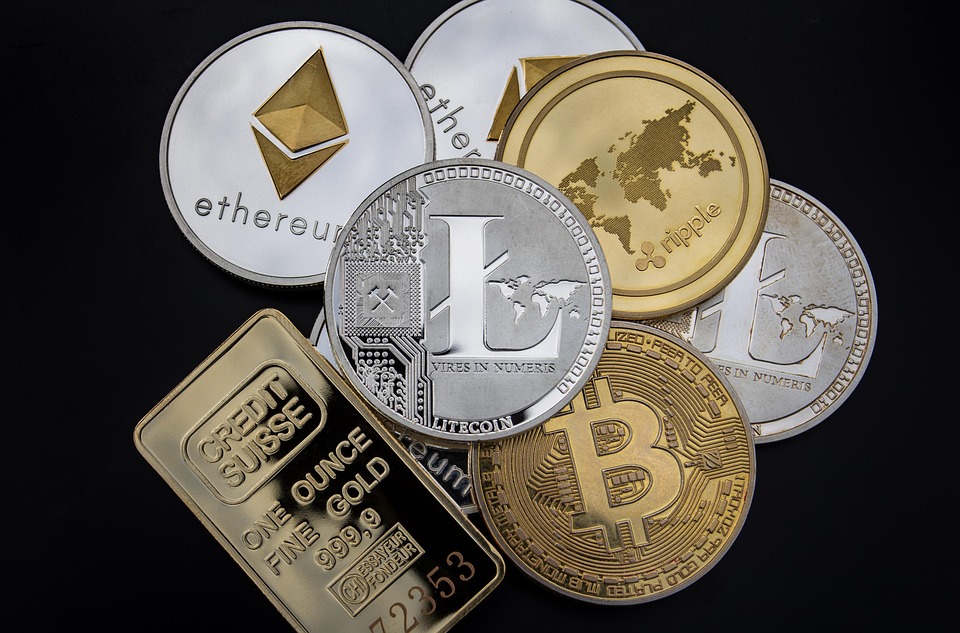
Decentralized Finance (DeFi) represents the cutting edge of the legal challenge. DeFi applications and Decentralized Autonomous Organizations (DAOs) operate entirely through code, with no single, identifiable human entity in charge.
The legal system is struggling to apply traditional concepts of corporate liability and responsibility to entities defined by smart contracts.
M. The Entity Problem: Regulating Code
DeFi protocols are governed by Smart Contracts—self-executing code stored on the blockchain. The fundamental legal question is: who is liable when a smart contract fails, or when a DeFi protocol facilitates illegal activity?
Regulators are exploring ways to hold the protocol founders, developers, or even large token holders (governors) responsible, treating them as organizers of an unregulated entity.
N. DAOs and Legal Personhood
A Decentralized Autonomous Organization (DAO) is governed by code and token-holder votes, rather than a traditional board of directors. Regulators are debating whether DAOs constitute a partnership, a corporation, or an entirely new form of legal personhood.
Lack of clarity means DAOs currently face massive, uncertain legal risks, including the potential for token holders to be treated as personally liable partners in an unregulated investment scheme.
O. Stablecoins and Monetary Risk
Stablecoins, digital assets pegged to the value of a fiat currency (like the USD), are under intense regulatory scrutiny. Regulators fear they could pose systemic risks to the traditional financial system if they fail or lack sufficient reserves.
New regulations are being introduced to mandate clear, auditable reserve requirements and capital standards for stablecoin issuers, essentially treating them as regulated banks or e-money institutions.
P. Market Manipulation in Decentralized Markets
Regulators are concerned about Market Manipulation within decentralized protocols. Since governance and liquidity are controlled by token whales, the potential for pump-and-dump schemes or flash loan attacks is high.
Enforcement against market manipulation is difficult due to the pseudonymous nature of DeFi users. This necessitates cooperation between regulators and blockchain analytics firms.
4. Taxation and Accounting for Digital Assets
For governments, the most direct and necessary regulatory concern is revenue collection. Taxation rules for cryptocurrencies are rapidly solidifying, forcing users to track and report their holdings and transactions.
The tax treatment of crypto assets varies widely, often defining them differently for tax purposes (as property) than for financial regulatory purposes (as securities or commodities).
Q. Crypto as Property vs. Currency
Most major tax authorities globally treat cryptocurrency not as currency, but as property or a capital asset for tax purposes. This means every transaction (selling, trading, or using crypto to buy goods) is a taxable event.
The difference between the asset’s purchase price (cost basis) and its sale price (realization price) results in a capital gain or loss. This creates a complex compliance burden for active traders.
R. Reporting Obligations and Tracking
Users have a legal obligation to accurately track and report all crypto transactions, including those made across multiple exchanges and wallets. This is necessary to correctly calculate capital gains and losses.
Governments are increasingly requiring exchanges to submit tax forms and transaction data directly to tax authorities, making it much harder for users to avoid reporting crypto income.
S. Accounting Standards for Businesses
Businesses that hold or transact in cryptocurrencies must adhere to strict Accounting Standards. Questions arise over how to value volatile assets and how to account for mining revenue or token burn events.
Official guidance is evolving, with standards bodies attempting to create clear rules for reporting these unique digital assets on corporate balance sheets.
T. Tax Treatment of Specific DeFi Activities
Tax authorities are grappling with how to treat novel DeFi activities. These include staking rewards, liquidity mining, airdrops, and governance token distributions.
The classification of these activities—as income, capital gains, or property—determines the timing and amount of the resulting tax obligation. This complexity often necessitates specialized crypto tax software.
5. Future Trajectory and Evolving Legal Trends
The legal and regulatory landscape for blockchain and crypto is far from settled. Future trends indicate a move toward more clarity, specialization, and potentially greater enforcement coordination across nations.
Regulators are moving away from outright bans and toward specialized regulatory sandboxes and distinct legal regimes for digital assets.
U. Move Towards Specialized Digital Asset Legislation
Instead of trying to force crypto into old legal categories, many jurisdictions are creating entirely new, specialized legislative frameworks for digital assets. These laws address the unique technological features of blockchain directly.
These frameworks often define specific categories for tokens, establish bespoke licensing for crypto service providers, and provide regulatory clarity essential for institutional adoption.
V. Consumer Disclosure and Transparency Requirements
Expect a major regulatory push for enhanced Transparency and Disclosure. Regulators will demand clearer, more understandable disclosures regarding the risks associated with investing in highly volatile crypto assets.
This includes mandatory plain-language warnings about smart contract risks, liquidity issues, and the high potential for total loss of investment.
W. Regulation of Mining and Environmental Impact
Regulators are increasingly examining the environmental impact of certain consensus mechanisms, particularly Proof-of-Work mining. Future legislation may address the massive energy consumption associated with crypto mining operations.
This could involve energy reporting requirements, carbon taxes, or preferential regulatory treatment for more energy-efficient Proof-of-Stake protocols.
X. Central Bank Digital Currencies (CBDCs)
The rise of decentralized cryptocurrencies has spurred central banks worldwide to explore issuing their own digital fiat—Central Bank Digital Currencies (CBDCs). CBDCs introduce an entirely new layer of digital asset regulation.
CBDCs will pose questions regarding privacy, surveillance, monetary policy control, and their impact on commercial banks. This will be a defining regulatory topic for the next decade.
Y. International Regulatory Harmonization
As crypto remains borderless, the pressure for International Regulatory Harmonization will intensify. Bodies like the FATF, the G7, and the G20 are working to establish minimum global standards for AML, market integrity, and stablecoin regulation.
This cooperation is necessary to prevent criminals from exploiting gaps in national legislation and to facilitate legitimate cross-border digital trade.
Z. The Future of Regulatory Technology (RegTech)
Regulators are realizing they must leverage technology to oversee the digital space. The adoption of Regulatory Technology (RegTech), which uses AI and blockchain analytics to automate compliance and surveillance, is growing rapidly.
This shift helps identify illicit activity faster and reduces the manual burden of AML/KYC reporting for regulated entities. It represents a technological arms race against digital crime.
Conclusion: Adapting to the Digital Legal Paradigm

The legal landscape surrounding blockchain and cryptocurrency is defined by rapid evolution and fundamental tension with existing centralized legal systems. Regulators worldwide are strategically focusing on identifiable intermediaries, such as exchanges, to impose essential AML and KYC obligations. The complex legal classification of digital assets, primarily as securities or commodities, dictates the relevant enforcement authority and the compliance burden.
Unregulated decentralized finance (DeFi) and DAOs represent the newest and most significant legal challenge, straining the traditional concepts of corporate liability. Mandatory tax reporting, specialized licensing, and clear risk disclosure are becoming the unavoidable costs of operating in this digital space. Ultimately, all market participants must exercise continuous vigilance and proactively adapt to these evolving legal paradigms.